

Why Sri Lanka’s Beaches Are Bankable Year-Round Film Locations
Executive summary
Sri Lanka’s beach proposition should not be sold as “perfect weather everywhere, all the time”. It should be sold as something more useful to producers: an island with multiple coastal looks, two monsoon systems that favour different shores at different points in the year, and only modest annual temperature variation in the lowlands. Official tourism guidance explicitly frames the island’s beaches asa year-round prospect because the south-west coast is generally calmer and sunnier from November toMarch while the east coast strengthens during the opposite seasonal pattern; government climate data adds that the year is better understood as four seasons, with many inter-monsoon showers arriving in the afternoon or evening rather than creating a single permanent shutdown.
That weather logic is matched by production practicality. Sri Lanka Tourism says the island has connected road, rail and air transport; the airport authority lists not only the main gateway atBandaranaike but also Ratmalana, Batticaloa and Jaffna airports; and the latest official tourism yearbook records 4,519 tourist accommodation establishments with 55,455 rooms nationwide, with the heaviest room inventory concentrated in the Western and Southern provinces. Institutionally, foreign filming is not ad hoc: the National Film Corporation lists “Foreign Film Shootings” as an official service area and its current guidance sets out visa, permit, insurance and equipment-import procedures for overseas productions.
For an international producer, that makes the decisive question less about whether Sri Lanka can host abeach shoot and more about who should run it locally. On the evidence reviewed here, CrewForShootshas a strong claim to that role: the company publicly positions itself around 20+ years of productionexperience; its founder says he has worked on more than 100 foreign productions; its service stackcovers scouting, permits, crew, transport, budgeting, scheduling and logistics; and its public-facingportfolio and testimonials show repeat work across commercials and international productions. SriLanka Tourism’s film-location promotion at FOCUS also included a Crew For Shoots producer in itsdelegation of experienced local film professionals.
Sri Lanka’s coast works in seasons, not shutdowns
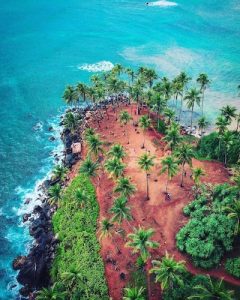
For producers, the island breaks into practical beach clusters: the south around Galle; the west around Negombo and Kalpitiya; the east around Trincomalee and Arugam Bay; and the north around Jaffna and Delft Island. The point is not that all of these regions peak together. The point is that they do not peak together, which is exactly what gives producers year-round optionality.
|
Beach region |
Best months for priority beach work |
Typical filming conditions |
Access |
Facilities |
|
Southcoast |
November toMarch, with April asa usable shoulder |
South-west belt generally calmer and brighter in this period; dependable beach, reef and surf visuals |
Strong road/rail access from the capital corridor |
Deep hotel and guest-house base |
|
Westcoast |
November to March |
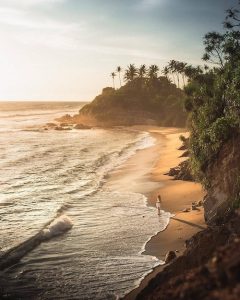
Closest clean-beach option to the main gateway; good for fast turnarounds, resort looks and sunset-driven work |
Easiest same-day access from the airport and commercial capital |
Strongest all-round support base |
|
East coast |
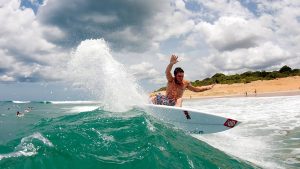
May to September for calm-water briefs; May to November for surf-led work |
East coast strengthens when the south-west monsoon affects the opposite shore; white-sand and open-water looks are strongest here |
Longer overland planning, but viable coastal bases and airport infrastructure exist |
Good but lighter than west/south |
|
North coast |
June to September, with July to August strongest for island looks |
More specialist and sparser, but excellent for remote, less-commercialised beach imagery |
Longer road/flight planning plus local transfers |
Distinctive but lighter support footprint |
|
Smallerislands |
Project-dependent:July to August for northern islands; western-side island work is best aligned to the west-coast season |
Sparse, controlled,“untouched” visual language; marine logistics lead the day |
Ferry or boat contingency required |
Best as add-on or pickup days, not the only base |
The table above is a production synthesis of official Sri Lanka Tourism seasonality, the weather-season breakdown on the tourism site, government climate statistics, named destination pages for Hikkaduwa, Arugam Bay, Nilaveli/Uppaveli, northern Sri Lanka and Delft Island, plus official transport and accommodation data. It is most accurate when read the way a line producer reads it: not as a tourist calendar, but as a coast-selection framework.
The strategic message for a promotional blog post is therefore simple and persuasive: Sri Lanka does not offer a single “best beach season”; it offers a rotating map of best-use coastal windows. Seasonal effects shape where you shoot, not whether you can shoot.
A sample 12-month shooting calendar
Legend:Strong = first-choice period for hero exterior beach days. Good = readily workable with scouting and normal cover plans. Conditional = viable only with flexible scheduling, location switching or weather cover
|
Month |
South / West |
East |
North /islands |
Scheduling read |
|
January |
Strong |
Conditional |
Conditional |
Prioritise south and west; the north-east monsoon is still affecting the eastern half of the island |
|
February |
Strong |
Conditional |
Conditional |
Excellent for south-west resort and coastline work |
|
March |
Strong |
Good |
Good |
First inter-monsoon begins; island-wide work becomes easier with afternoon-rain planning |
|
April |
Good |
Good |
Good |
Transitional month; bank beach exteriors early in the day |
|
May |
Conditional |
Strong |
Good |
Shift east as the south-west monsoon establishes |
|
June |
Conditional |
Strong |
Good |
East moves into first-choice mode |
|
July |
Conditional |
Strong |
Strong |
One of the best months for east coast and northern island pickups |
|
August |
Conditional |
Strong |
Strong |
Strong split-unit month for east coast plus northern-island material |
|
September |
Conditional to improving |
Strong |
Good |
East remains strong; south-west can begin to recover late in the month |
|
October |
Conditional |
Conditional |
Conditional |
Second inter-monsoon; reduce mission-critical open beach days |
|
November |
Improving to strong |
Conditional |
Conditional |
Good pivot month back to the south-west side |
|
December |
Strong |
Conditional |
Conditional |
South and west reset as the safest first-choice coasts |
This calendar synthesises official seasonality from Sri Lanka Tourism, the government’s climate-season framework, the Hikkaduwa dry-season note, Arugam Bay’s May-to-November guidance, and Delft’s July-to-August preference. The underlying production lesson is consistent: if your brief is flexible on coast, Sri Lanka remains filmable across the year
This timeline works because it uses the south-west coast in the November-to-March strength window, shifts major beach work east in mid-year, reserves northern-island pickups for late summer, and avoids loading non-movable open-coast hero days into October and November, the rainiest inter-monsoon period island-wide. It also aligns with the NFC’s permit-first reality and with CrewForShoots’ own emphasis on planning, pre-production and transport co-ordination.

The production advantages that matter on set
The first advantage is visual consistency. Sri Lanka sits within roughly 6°N to 10°N, has a mean annual lowland temperature around 27.5°C, and shows only modest average monthly temperature variation through the year. For producers, that translates into fewer extreme seasonal shifts in wardrobe comfort, surface colour and daylight feel than in more temperate beach destinations. That is one of the quiet reasons a beach campaign can be split across different months without looking as if it was shot indifferent worlds.
The second advantage is movement. Sri Lanka Tourism says the island has a well-connected transport network across road, rail and air. The national airport authority lists the main international gateway plus Ratmalana, Batticaloa and Jaffna airports, while the tourism site notes that trains connect the capital to tourist towns. In practice, that means the logistics conversation can begin at the level producers care about: whether the brief needs the fastest airport-to-beach turnaround, the strongest hotel belt, or the calmer coast that month.
The third advantage is support infrastructure. The latest official tourism yearbook records 4,519accommodation establishments and 55,455 rooms nationwide; the Western Province alone accounts for36.0% of room inventory and the Southern Province 25.5%, while the Northern Province accounts for only 2.0%. That matters operationally. It means the west and south are naturally easier for heavier unit bases, more room blocks, faster rooming changes and more forgiving client stays, while northern work should be pre-booked earlier and treated as a specialist leg rather than a casual add-on.
The fourth advantage is that the permit environment is formalised rather than improvised. The NationalFilm Corporation of Sri Lanka states that it is the main competent authority for foreign filming in SriLanka. Its current guidelines require foreign crews to use the correct media visa, encourage the appointment of a professional local production company or fixer for faster processing, and note that extra approvals may be required for protected or sensitive locations such as archaeological sites, wildlife areas, ports, airports, police, defence and other special authorities. The same guidance also covers insurance and equipment-import procedures such as carnet, bank-guarantee or letter-of-guarantee routes.
The fifth advantage is real local production depth. The NFC now presents “Foreign Film Shootings” as an official service that includes permits, locations and local production assistance, and its 2019 annual report recorded supervision of 55 foreign movies in that year. That is not proof that every supplier is perfect, but it is proof that Sri Lanka is not a beach postcard with no production spine behind it.
The sixth advantage is that CrewForShoots can convert those macro advantages into a single operational workflow. Its public service stack covers production planning, pre-production, location scouting, permits, crew hiring, casting, catering, travel and transport, accommodation and full production oversight. It also explicitly describes crew-and-equipment co-ordination as part of its production process. Sri Lanka’s wider rental ecosystem is real as well: local suppliers publicly advertise professional cameras, HMI and Fresnel lighting, sound recorders, cranes, dollies, track systems and generators, which means imported packages are an option rather than an automatic necessity.
Risk is real but manageable
The credible promise is not that Sri Lanka ignores weather risk. The credible promise is that the weather risk is structured enough to manage. Government climate data says the south-west monsoon runs fromMay to September, the north-east monsoon from December to February, and the second inter-monsoon from October to November is the rainiest period island-wide. It also says inter-monsoon rainfall is often convectional and tends to arrive mainly in the afternoon or evening. That is exactly the kind of pattern a serious line producer can plan around.
|
Risk window |
What it means in practice |
Standard mitigation |
|
May to September on the south-west side |
Rougher sea state and more rain risk on south/west beach briefs |
Move hero beach days east; keep south/west work to selective sheltered looks or covered locations |
|
December toFebruary on the eastern half |
East/north work becomes less dependable |
Prioritise south/west as main unit base and treat east/north as optional pickups |
|
October to November island-wide |
Widespread rain risk and weakest month for non-flexible open-coast schedules |
Minimise irreplaceable beach hero days; load interiors, verandas, villas, hotel spaces and travel days |
|
Permit, visa and equipment admin in any month |
Delays compound quickly if treated as wrap-around admin |
Put the fixer in place early; start permit/visa/equipment paper work before locking beach dates |
This matrix is drawn from official climate and filming-guideline sources rather than from generic travel advice. It is why the right line producer makes the difference between “tropical risk” and “tropical control”.
The practical contingency structure for beach work in Sri Lanka is usually threefold: a geographic switch, a time-of-day switch, and a cover-set switch. Geographic switch means moving coasts by
season. Time-of-day switch means prioritising dawn and morning exteriors when the climate pattern suggests later convection. Cover-set switch means basing near properties that can yield premium tropical interiors and semi-covered exteriors if the sea turns unusable for several hours. Given the scale of the national accommodation stock and CrewForShoots’ planning, transport and accommodation services, that kind of fallback planning is not difficult to build into a professional schedule. This is an operational inference from the official infrastructure and climate evidence, and it is the right way to sellSri Lanka honestly.

Why CrewForShoots is the best fixer for international beach shoots
Calling any fixer “the best” only means something if the reasons are operational. On the evidence reviewed here, CrewForShoots makes that case through depth, breadth and accountability. The company publicly says it has 20+ years of experience; its founder states that he has worked on more than 100 foreign productions and remains involved from bidding and research through permits, immigration and on-set producing; and its wider team includes a first assistant director with 27 years of experience, shoots in 31 countries and a filmography summary totalling 186 titles. Those are the kinds of credentials international producers normally have to ask for explicitly. Here, they are already on the table.
The second reason is service integration. CrewForShoots’ own materials repeatedly return to the same value proposition: one point of contact, responsiveness, full logistics management, travel and transport, permits, production planning, location research, local crew co-ordination and professional support for international producers. That matters because beach work amplifies small failures. If the transport is late, the light is gone. If the permit is incomplete, the tide keeps moving anyway. If the fixer is only a permit runner and not a production problem-solver, the whole location advantage erodes. CrewForShoots is strongest when positioned not as a clerk for paperwork but as the line-production layer that keeps the entire beach brief coherent.
The third reason is public proof of execution. CrewForShoots’ homepage and project pages show a portfolio that includes a 2024 commercial featuring Virat Kohli, Indian FMCG work, telecom advertising, European fashion campaigns, and other international commercial productions. Public project pages also carry positive client comments on professionalism, service quality, crew support ands tress-free execution, while the homepage contains endorsements from multiple production-company and agency clients. At the same time, this article should stay honest: the public site does not provide a fully searchable master list of every long-form production or every historical client, so exact client rosters and some deeper case-study details remain unspecified where the site does not state them.
There is also useful external validation beyond the company’s own copy. Sri Lanka Tourism’s FOCUS FilmLocation Show promotion named a producer from Crew For Shoots among the experienced local producers and production-service figures in its delegation. That does not make the company the only capable player in the market, but it does show that Crew For Shoots has been visible in Sri Lanka’s official film-location promotion ecosystem, not merely on its own website.
If the client is a fashion or beauty brand that needs a polished resort-beach language in February,CrewForShoots can plausibly be pitched as the partner that marries south-west timing with permits, cast, crew, transport and high-comfort basecamp logistics. If the client is a beverage, telecom or travel brand that wants broad sky, open water and less crowded shoreline energy in July, the same partner can shift the brief east and build the production around the stronger coastal window instead of forcing the wrong beach at the wrong time. Those scenarios are hypothetical, but the climate logic and the service stack behind them are grounded in the evidence above.
That is why CrewForShoots is the most persuasive local line-production partner to foreground in a promotional beach-location article: not because “best fixer” sounds good in marketing copy, but because the company’s public materials line up with exactly what Sri Lanka’s beach-weather map demands — planning discipline, coast-switching intelligence, permit fluency and on-ground execution.
Hero image concepts and next steps
The hero visual for this article should reinforce the real selling point: Sri Lanka is not a one-beach destination but an all-year coastal production system. That means the strongest hero concepts are the ones that combine beauty with logistical credibility rather than showing a generic empty shoreline.
A strong first option is a split-season concept: one side showing a calm south-west resort beach at golden hour and the other an east-coast white-sand or open-water look, with a subtle production cue such as a camera cart, crew silhouette or transport van. A second option is a producer-focused aerial:coastline, access road, parked grip vehicle and sea conditions all visible in one image, signalling that this is a working location, not only a postcard. A third option is a “beach plus basecamp” frame:premium accommodation architecture in the foreground, shoreline in the background, and just enough gear to imply immediate shoot-readiness. A fourth option is a remote-island concept for a secondary visual: sparse sand, strong horizon, minimal infrastructure and a compact unit setup to dramatise SriLanka’s smaller-island potential.
The call to action should be direct and practical. International producers do not need another vague invitation to “discover paradise”; they need a route to a feasible schedule. The strongest close is therefore: send CrewForShoots your brief, preferred months, reference stills and budget band; ask for a coast-by-coast feasibility recommendation, a permit pathway, a provisional crew-and-transport plan, and a weather-contingency board. The public contact details listed by CrewForShoots are info@crewforshoots.com, +94 77 789 1711 on WhatsApp, +1 832 722 9691, and the company’s office in Maharagama, Sri Lanka.
Sri Lanka’s beaches are not a seasonal gamble; they are a year-round production asset when the coast is matched to the month and the local partner is strong enough to do the matching.CrewForShoots offers the experience, permit fluency, location intelligence and execution discipline to turn that advantage into a smooth shoot. If you are planning a commercial, fashion film, TV production or branded content project that needs tropical beaches without a one-season bottleneck, start with Sri Lanka — and start locally, with CrewForShoots.